
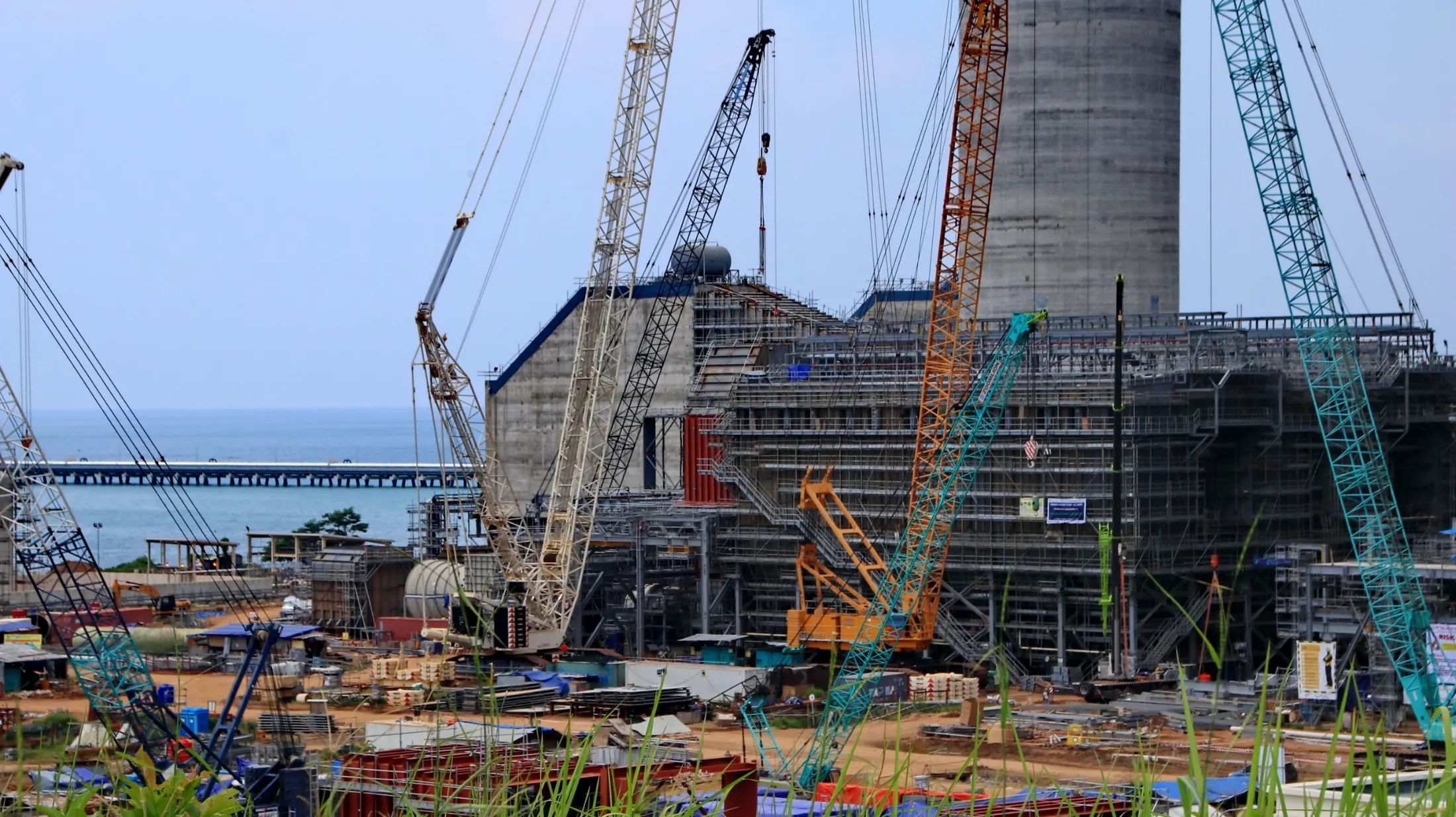
Nuclear energy
Hold points and commissioning windows built into the schedule, with risk analysis for inspection and licensing uncertainty.
Service 03
Many schedules are built for submission rather than for running the work. Cost is reported separately from progress, forecasts are single dates without a confidence attached, and the sequence on paper is not the sequence the site can deliver.
This service develops and maintains the schedule, the cost control and the risk analysis on one structure. The work is done inside the client’s process, so the numbers they produce are the numbers the project runs on.
Logic, sequence and resources checked against the model and the site, not only against the contract dates.
Progress, cost and earned value measured together, so forecasts rest on verified progress.
Dates and budgets given with their probability, and the risks that drive them named.
Schedule, cost and risk are built on one agreed structure and updated each reporting period, so each report states its data date and reads from the same data.
Primavera P6 schedules and baselines developed and maintained, contractor schedules integrated and coded to one WBS.
Construction sequences checked against the BIM models for access, logistics and overlapping work before they reach site.
Cost structure set on the same WBS and CBS, so progress, cost and earned value are measured together.
QSRA and QCRA with Monte Carlo simulation, showing how likely the planned dates and budget are and which risks drive them.
Alternative sequences prepared when the project falls behind, within the contractual approval procedures.
Deliverables: schedules and baselines, 4D sequence checks, recovery plans, cost and earned value reports, forecasts to completion and, where required, QSRA and QCRA reports.
Planning and cost control · period report
Main works, week 32
| Activity | Baseline | Forecast | Critical | Float | Complete |
|---|---|---|---|---|---|
| Substructure | 0 to 4 | 0 to 4 | No | Complete | 100% |
| Superstructure | 2 to 7 | 2 to 8 | Yes | 0 wk | 90% |
| Envelope | 5 to 10 | 6 to 11 | No | 3 wk | 35% |
| MEP rough-in | 6 to 10 | 6.5 to 11.5 | Yes | 0 wk | 30% |
| Hook-up and testing | 9 to 12 | 10.5 to 13 | Yes | 0 wk | 0% |
| Commissioning | 11 to 13 | 12 to 14 | Yes | 0 wk | 0% |
| Handover | 13 to 13 | 14 to 14 | Yes | 0 wk | 0% |
Largest overrun: MEP installation, €1.4m over budget (9.5%). Committed cost includes actual cost incurred; forecasts are re-estimated by package.
| Month | Planned value | Earned value | Actual cost |
|---|---|---|---|
| M1 | 1.2 | 1.1 | 1.2 |
| M2 | 3.0 | 2.8 | 3.0 |
| M3 | 5.6 | 5.1 | 5.5 |
| M4 | 9.0 | 8.2 | 8.7 |
| M5 | 13.2 | 12.0 | 12.7 |
| M6 | 18.0 | 16.3 | 17.2 |
| M7 | 22.9 | 20.8 | 21.9 |
| M8 | 27.6 | 25.3 | 26.6 |
| M9 | 32.0 | - | - |
| M10 | 36.2 | - | - |
| M11 | 40.0 | - | - |
| M12 | 43.2 | - | - |
| M13 | 46.0 | - | - |
| M14 | 46.0 | - | - |
Earned value uses the approved baseline and the agreed progress measurement rules. The estimate at completion is re-forecast package by package with approved changes included; it is not derived from CPI alone.
Completion week, 2,000 illustrative outcomes
| Week | Outcomes | Finished by this week |
|---|---|---|
| W55 | 10 | 0% |
| W56 | 30 | 2% |
| W57 | 70 | 6% |
| W58 | 140 | 12% |
| W59 | 230 | 24% |
| W60 | 300 | 39% |
| W61 | 320 | 55% |
| W62 | 290 | 70% |
| W63 | 220 | 80% |
| W64 | 160 | 88% |
| W65 | 100 | 94% |
| W66 | 60 | 96% |
| W67 | 30 | 98% |
| W68 | 20 | 99% |
| W69 | 13 | 100% |
| W70 | 7 | 100% |
Main drivers of the result correlation with finish week
Illustrative synthetic distribution with 2,000 outcomes. The P-values describe this dataset; they are not a forecast for a client project or evidence of a live simulation on this page. Weeks count from the project start; week 60 is the deterministic handover, month 14 in the schedule. Driver values are the correlation between each risk and the finish week in this dataset. Confidence levels are not guarantees.
The tools are the same on every project. What the schedule and the cost structure have to capture depends on the sector.
Hold points and commissioning windows built into the schedule, with risk analysis for inspection and licensing uncertainty.
Base build, hook-up and tool move-in on one schedule, with 4D checks of areas, routes and simultaneous operations.
Repeatable hall-by-hall schedules, long-lead equipment tied to its activities, and cost forecasts per hall.
Schedule and cost structure aligned with the bill of quantities, so measured quantities drive progress and payments.
WBS, CBS and activity coding agreed with the project, so schedule and cost share one structure from the start.
Schedule built or reviewed, contractor schedules integrated, the sequence checked in 4D and the baseline approved.
Progress measured, schedule and cost updated, and earned value and forecasts reported each period.
QSRA and QCRA where forecasts must be defended, and recovery sequences when the project falls behind.
Yes. Schedules are built and maintained in the client’s P6 database, or delivered as P6 files to the client’s standards and coding. Contractor schedules prepared in other tools can be integrated into the project schedule.
Relevant activities are linked to model objects or work zones at the agreed level of detail, and model gaps and mapping coverage are recorded. 4D supports sequence and interface reviews before work reaches site; it does not replace design checks, method statements or the authorised site team’s decisions. Where the model is suitable, extracted quantities support the forecast after reconciliation to the agreed measurement rules; non-modelled work and indirect costs are included separately.
When a date or a budget has to be defended, or when the team needs to know which risks drive the result. The analysis is only as reliable as the schedule logic and the risk register behind it, so both are checked before any simulation is run.
Yes. It can be ordered for a defined deliverable, such as a baseline, a recovery plan or a risk analysis, or as monthly support in which Enncon runs planning and cost control inside the project team.
Other services
Tell us what you are building and where you need support.